

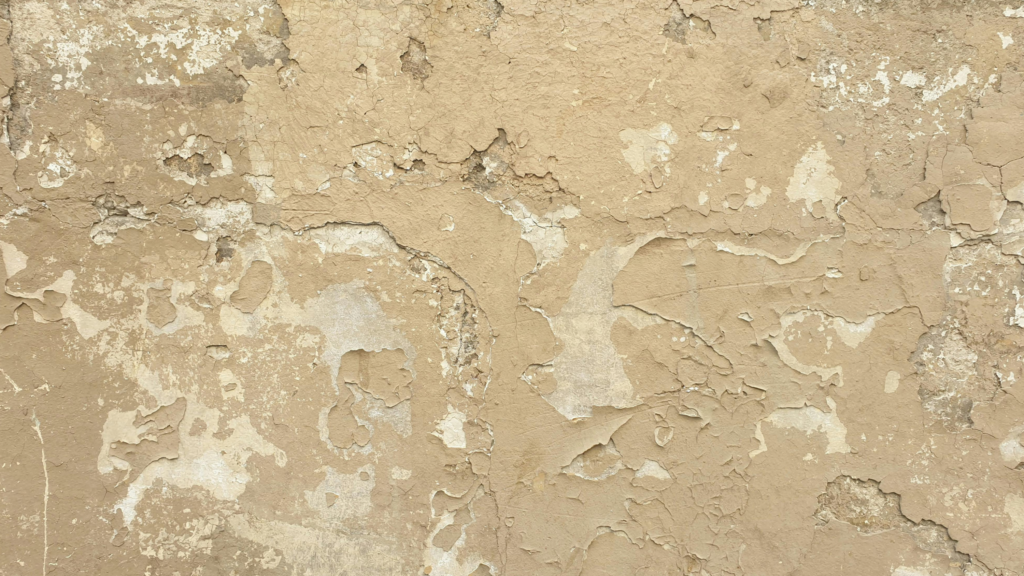
A garage floor that’s lifting in sheets, bubbling in patches, or coming away where you park isn’t bad luck, and it usually isn’t the product’s fault either. In almost every case we’re called to look at across Sydney, the cause was decided before the first coat went down.
The good news is that you can usually work out what happened yourself, in about five minutes, by looking at where the damage is and what the underside of the lifted coating looks like. That matters, because the cause decides whether your floor needs a patch, a recoat, or stripping back and starting again.
Nine times out of ten, a peeling floor isn’t a coating problem. It’s a preparation problem that took a year to show up.
Start with where it’s peeling
Peeling in large sheets, anywhere on the floor
This is an adhesion failure: the coating never bonded properly to the concrete. This almost always happens when the concrete wasn’t properly ground and profiled, or when moisture vapour transmission wasn’t dealt with, so the coating failed to form a strong mechanical bond with the concrete.
The usual culprit is preparation. Acid etching is faster and cheaper than diamond grinding, so it’s what most DIY kits recommend and what cut-price operators use. The problem is that it often leaves the weak, powdery top layer of the slab in place, along with any oil or sealer already in the concrete. The coating bonds beautifully to that weak layer, then takes it with it when it lets go.
Bubbles and blisters first, then peeling
This one comes from underneath. Moisture failures show a clear pattern: the damage appears in random areas across the slab rather than just at joints or edges, the underside of peeled coating is damp or shows white mineral deposits, blisters contain moisture when punctured, and the problem worsens during seasonal changes or after heavy rain.
It’s most common on ground-level slabs built without a working vapour barrier underneath, which covers a lot of older Sydney garages. Water vapour moves up through the concrete, has nowhere to go, and pushes the coating off the slab.
Peeling only where you park
If the damage is in two neat strips and the rest of the floor is fine, that’s hot tyre pickup. Tyres sit at 60°C or more after a drive, and on a thin or poorly bonded coating that heat softens the surface enough for the rubber to grip it. When the tyre cools, it holds on, and the coating comes up in patches next time you reverse out.
Hardware store roll-on kits fail this way most often, because they’re thin and usually go over an etched rather than ground slab.
Peeling between layers, not off the concrete
If the top layer is lifting but the coat underneath is still firmly stuck down, that’s an intercoat failure. Applying a coat outside the manufacturer’s recoat window, either too soon or too late, causes intercoat delamination, and amine blush, a film that can form on curing epoxy, will cause adhesion problems with later coats if it isn’t washed off first.
This is an installer error rather than a slab problem, which usually makes it the cheapest of the four to put right.
Two checks you can do yourself
The tap test. Tap around the damaged area with a coin or the handle of a screwdriver. Sound concrete gives a solid tap. A hollow sound means the coating has already lost its bond there, even if it looks fine. If the hollow sound extends well past the visible damage, the failure is bigger than it looks.
Look at the underside. Lift a loose piece and turn it over. Clean coating with no concrete attached means it never bonded to the slab. A thin layer of grey, powdery concrete stuck to the back means the concrete surface itself was weak. Damp coating, or white chalky deposits, points to moisture.
Can it just be patched?
Sometimes, but less often than people hope.
A spot repair works when the damage is genuinely isolated and the coating around it is sound: an impact chip, a gouge, or a small patch of lost flake. Resurfacing is the right call when delamination is widespread, covering more than about 15 to 20 percent of the floor or still spreading, when the failure is at the concrete-to-coating interface, when moisture exceeds the limits of the original system, or when contamination has penetrated the concrete and can’t be removed by surface preparation alone.
The one thing that never works is coating over the top of a failing floor. That isn’t a repair but a temporary patch that will fail again, often faster than the original, and if the root cause isn’t identified and corrected, any recoat is money wasted.
If a quote arrives that’s substantially cheaper than the others, ask what preparation is included and what the installer thinks caused the failure. If they can’t answer the second question, they’re about to repeat it.
Before you pay anyone, check your warranty
If a licensed contractor installed your floor, you may not need to pay for the fix at all.
Statutory warranties under the Home Building Act 1989 (NSW) are automatic and cover workmanship and materials. The periods are six years for major defects and two years for other defects, starting from the date the work was completed, and they apply regardless of changes in property ownership. If the problem becomes apparent in the last six months of the warranty period, proceedings may be commenced within a further six months after it ends.
You generally need to give written notice of the defect within six months of discovering it, and give the contractor a chance to rectify it before taking further action.
So before anything else: email the original installer, describe the problem, attach dated photos, and keep a copy. If they won’t respond, NSW Fair Trading has a complaints process for home building disputes. We’re flooring contractors rather than lawyers, so get proper advice on anything contested.
How to make sure it doesn’t happen again
Whoever does the work next, the floor should get:
- Diamond grinding, not acid etching. Link the words “concrete grinding and preparation” to /concrete-grinding-sydney/. It is the step that decides whether the floor lasts.
- A moisture check before quoting, not on install day, so a moisture barrier primer can be priced up front if it is needed.
- Oil and contamination ground out and degreased, rather than coated over.
- Cracks cut open and filled before any coating goes down.
- A topcoat rated for hot tyres, and a UV-stable one if afternoon sun reaches the floor through the roller door.
Frequently Asked Questions
How long should a garage floor last? A properly prepared floor should give you years of normal use, not months. If yours failed inside two years, preparation or moisture is almost certainly the reason.
Is the concrete underneath ruined? Usually not. Once the failed coating is ground off, the slab is generally fine. That’s the one piece of good news in most of these jobs.
Does a failed DIY kit cost more to fix? Yes, because removing the old coating is extra work on top of a new floor. It’s worth knowing before accepting a cheap quote to coat over the top.
Got a peeling floor? Text a photo of the worst section to 0423 640 954 and we’ll tell you what we think went wrong, free, before anyone visits. Or book a free inspection anywhere in Sydney.